Sound · Rhythm · Movement · Presence
Sensorisk musikk
A sensory encounter with live music and movement, where every way of being present is a way of participating.
- Who it is for
- Children with special needs, including children who need a calm, predictable and individually responsive setting
- Format
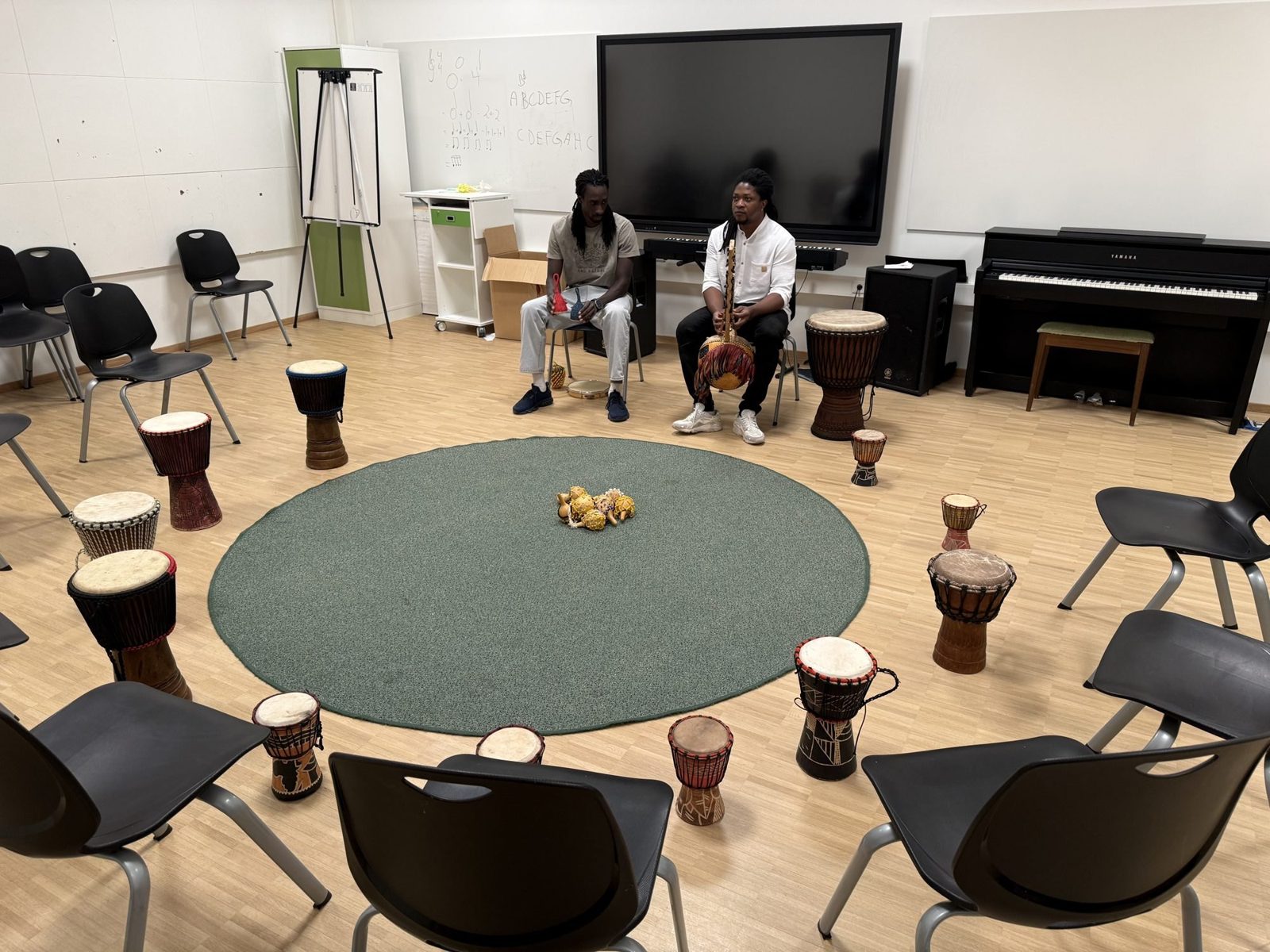
- Live sensory music and movement · 30 minutes · small groups in a quiet, protected room · low sound level, repetition, clear structure
- Artists
- Solo Diarra, Sarjo Sankareh
Sensorisk musikk (sensory music) is a calm and inclusive live music and movement experience created for children with special needs. Through West African instruments, rhythm and movement, Solo Diarra and Sarjo Sankareh create a safe artistic space for listening, exploration and presence, without demands or expectations of performance.
There is no right way to participate. Listening, moving, exploring – or simply being present – is enough.
About the programme
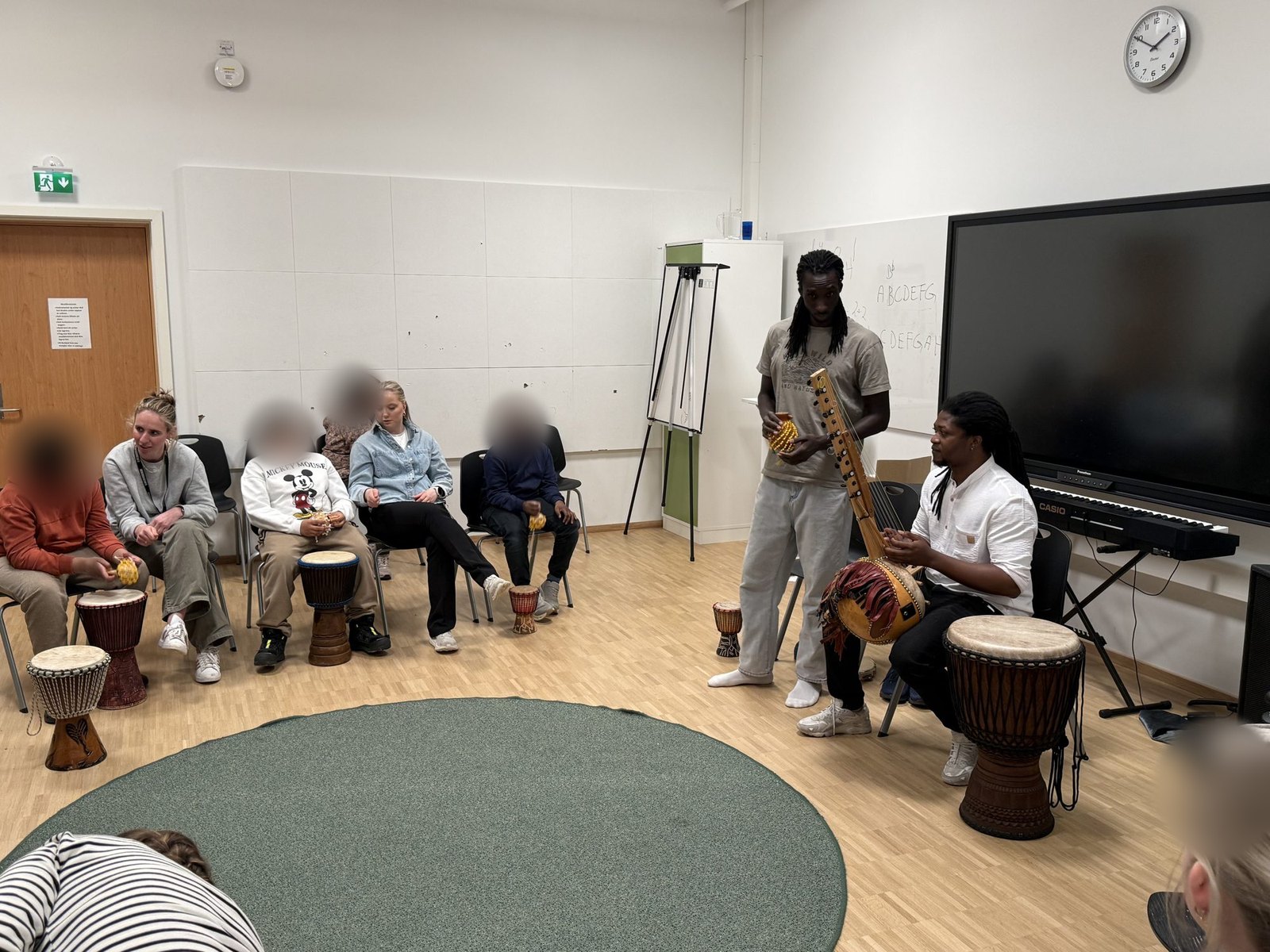
Sensorisk musikk is built around invitation rather than instruction. Children may listen to the music, move, explore instruments, observe from a distance or move in and out of the shared activity. Participation is never measured by completing a task or copying an adult.
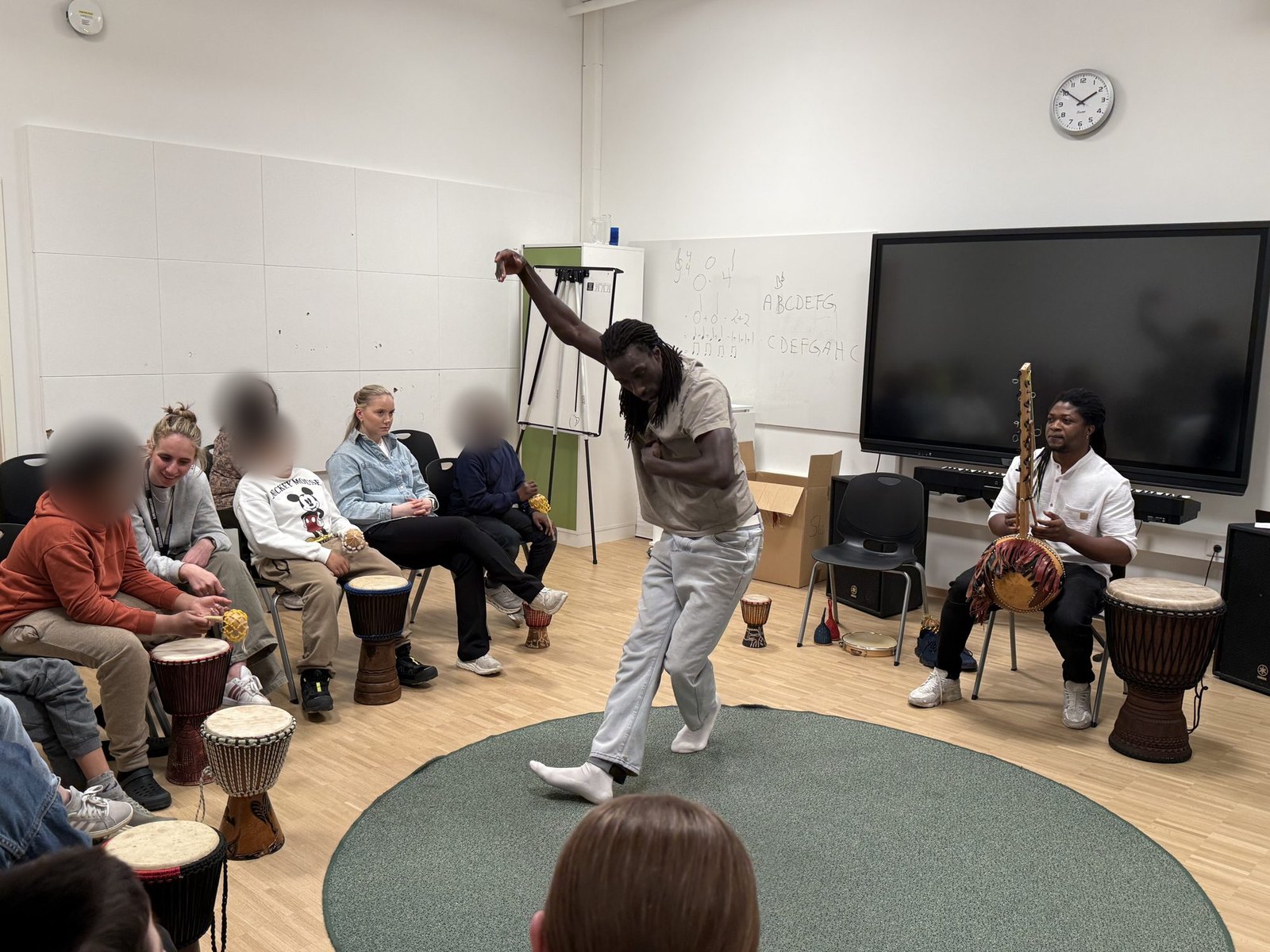
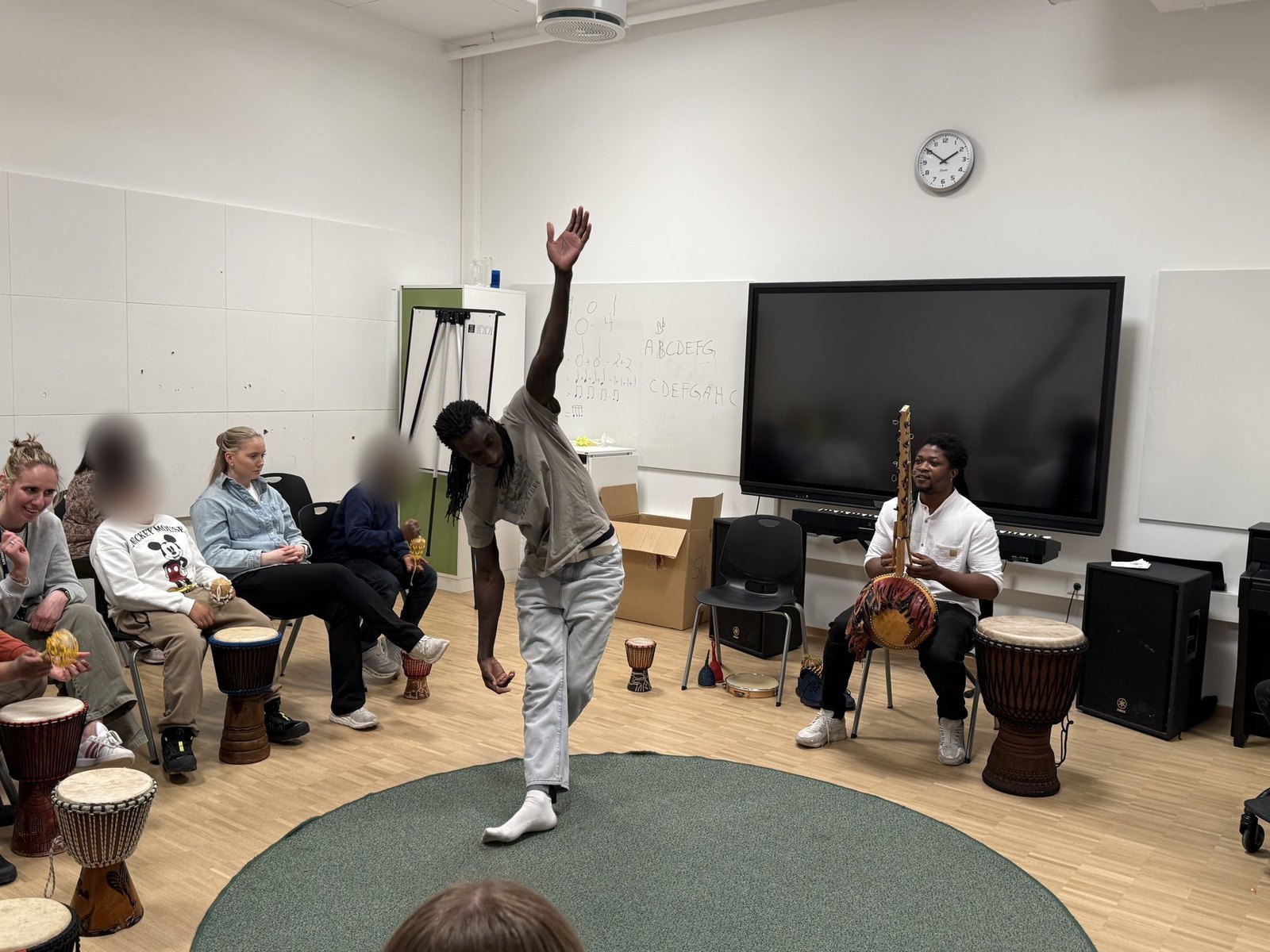
Solo Diarra creates a live musical environment using West African instruments and rhythm. Because the music is performed live, tempo, intensity, repetition and musical direction can respond to the group in the moment. Sarjo Sankareh works through movement and bodily presence, creating gentle opportunities for children to encounter rhythm physically and in their own way.
The experience uses a low sound level, repetition and a clear, predictable structure. Transitions happen gradually and communication is largely non-verbal. The artists observe the group closely and adapt, rather than requiring the children to adapt to a fixed performance.
The format is intentionally limited to 30 minutes, creating a concentrated artistic encounter without expecting children to sustain attention for an unnecessarily long session.
Artistic team
- Solo Diarra, music: live West African instruments, rhythm and responsive musical interaction
- Sarjo Sankareh, movement: movement, bodily presence and non-verbal interaction adapted to the group and the individual child
Tested in practice: Rustadtunet
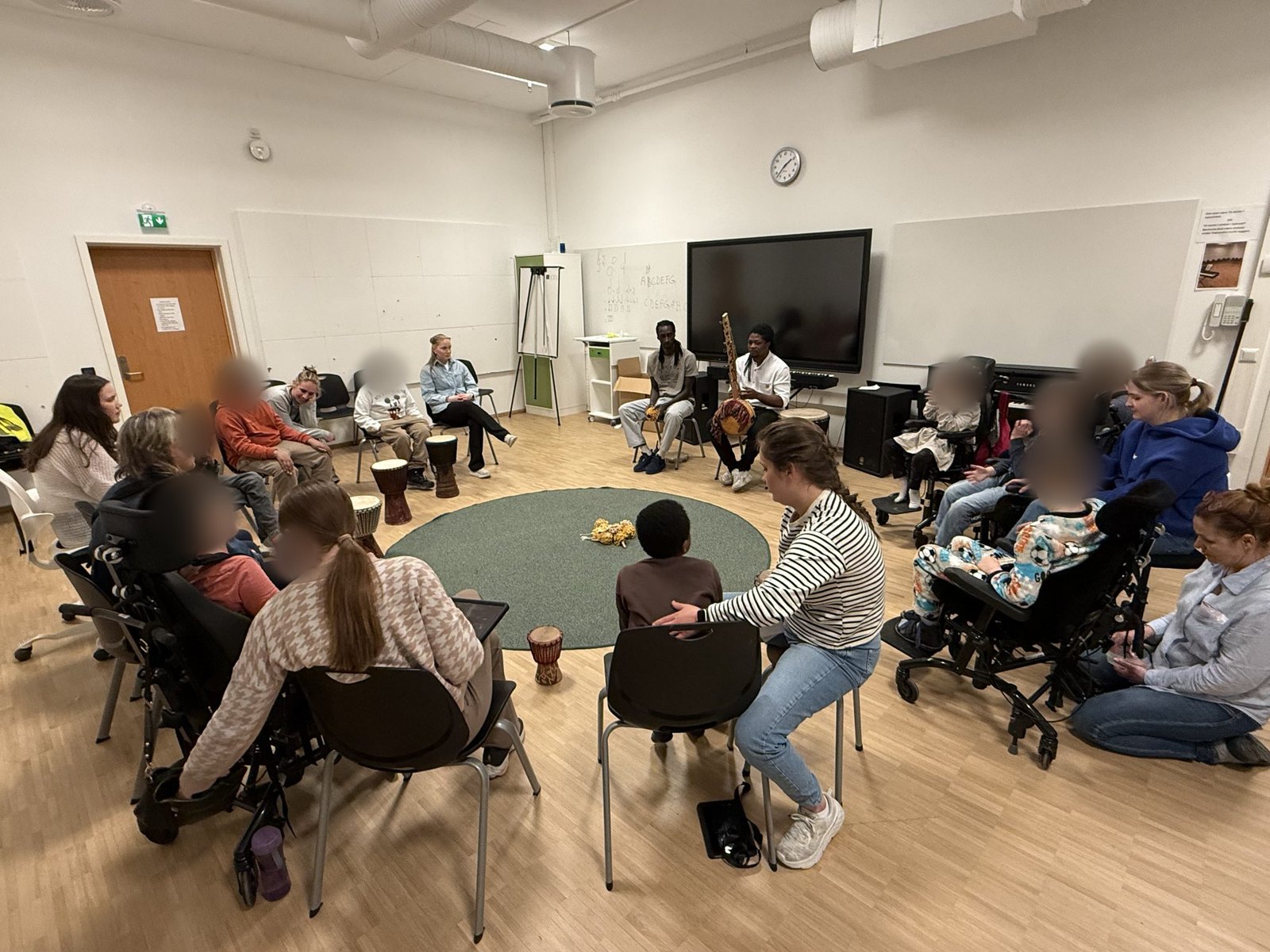
The programme has been presented at Rustadtunet, Rustad skole, an adapted school department for pupils with complex and multiple disabilities. The session included 12 pupils, many with autism-spectrum conditions or rare diagnoses and most without spoken language.
In its written recommendation, Rustadtunet reported that pupils explored instruments, listened, moved and participated in their own ways without demands for performance. Staff particularly noted the children's sustained engagement, joy, curiosity and interaction, and highlighted the artists' ability to read the group and adjust tempo and expression to individual pupils.
Rustadtunet recommends the programme to other schools, departments and institutions working with children and young people with special needs.