Storytelling · Live Music · Dance
Calabash Tales
A journey through story, rhythm and dance into the living tradition of the griot.
- Who it is for
- Theatres, festivals, cultural centres, libraries, schools and other venues presenting performing arts for children and families
- Age
- 4–12
- Format
- Live performance with audience participation · approx. 35–45 minutes · 3 performers · Norwegian, English and French
- Artists
- Solo Diarra, Bafana Nhlapo, Sarjo Sankareh
Step into the village of Diobaso, where a king has forgotten one of the most important lessons his father ever taught him: always listen to the griot.
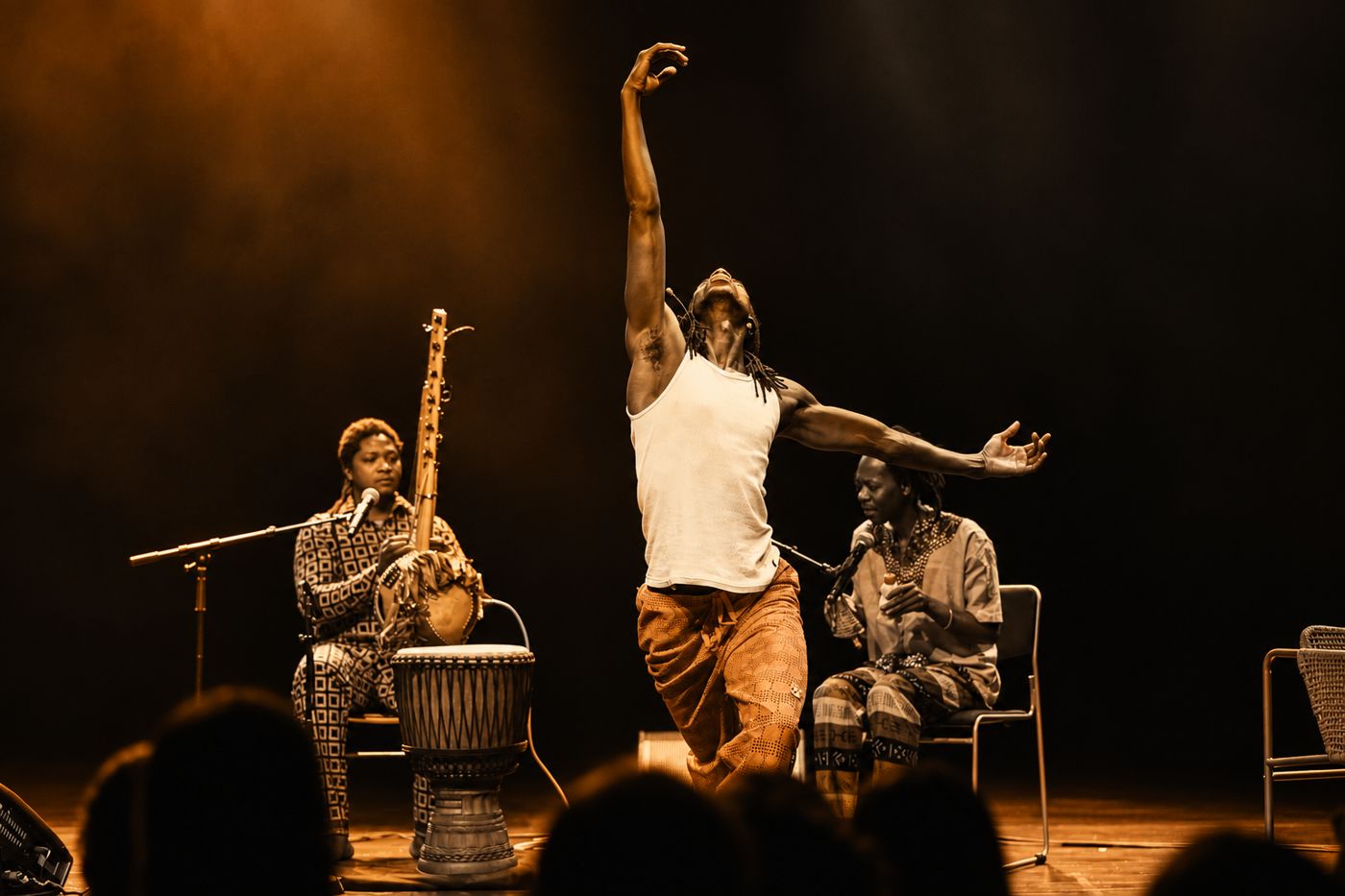
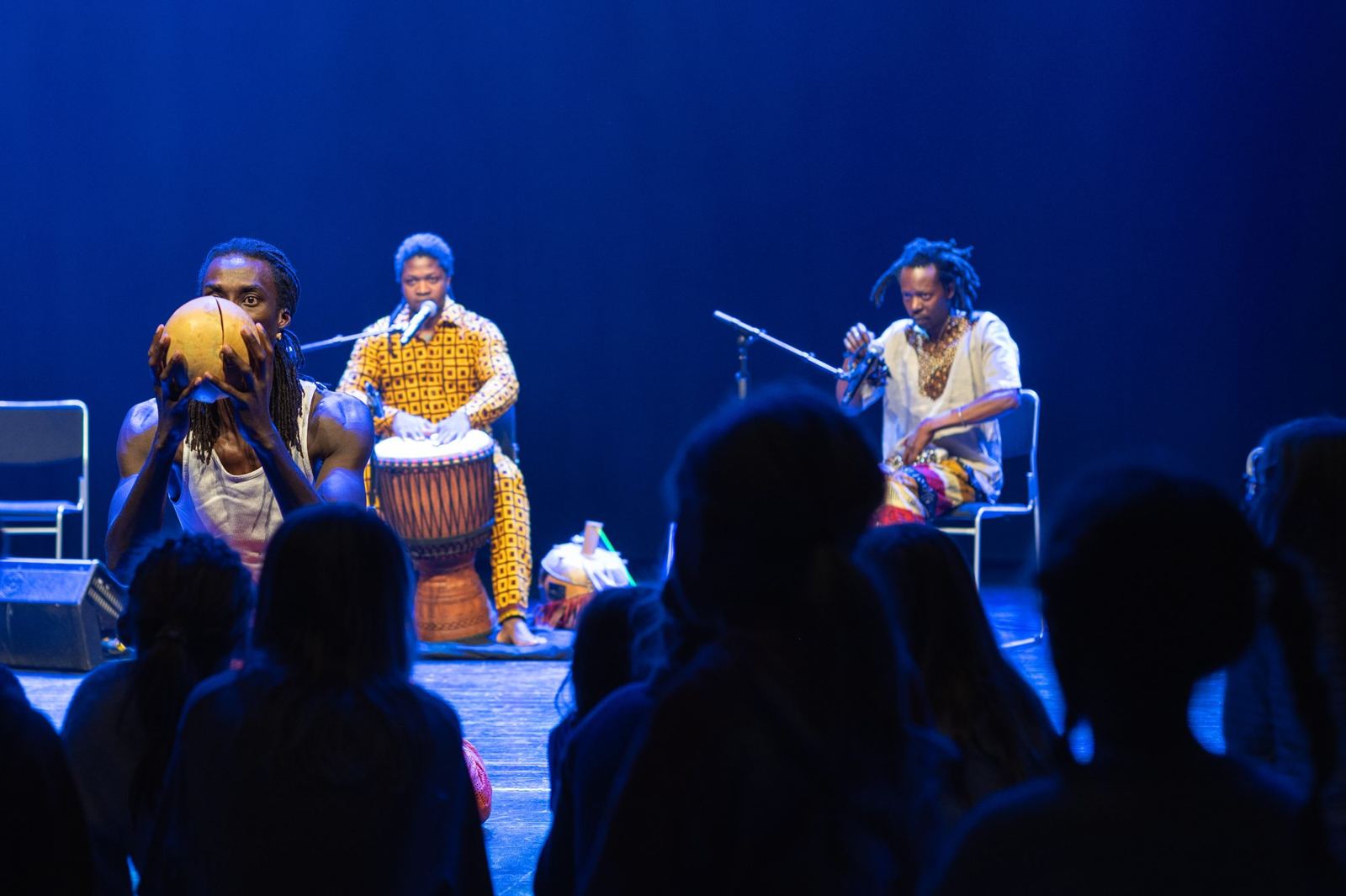
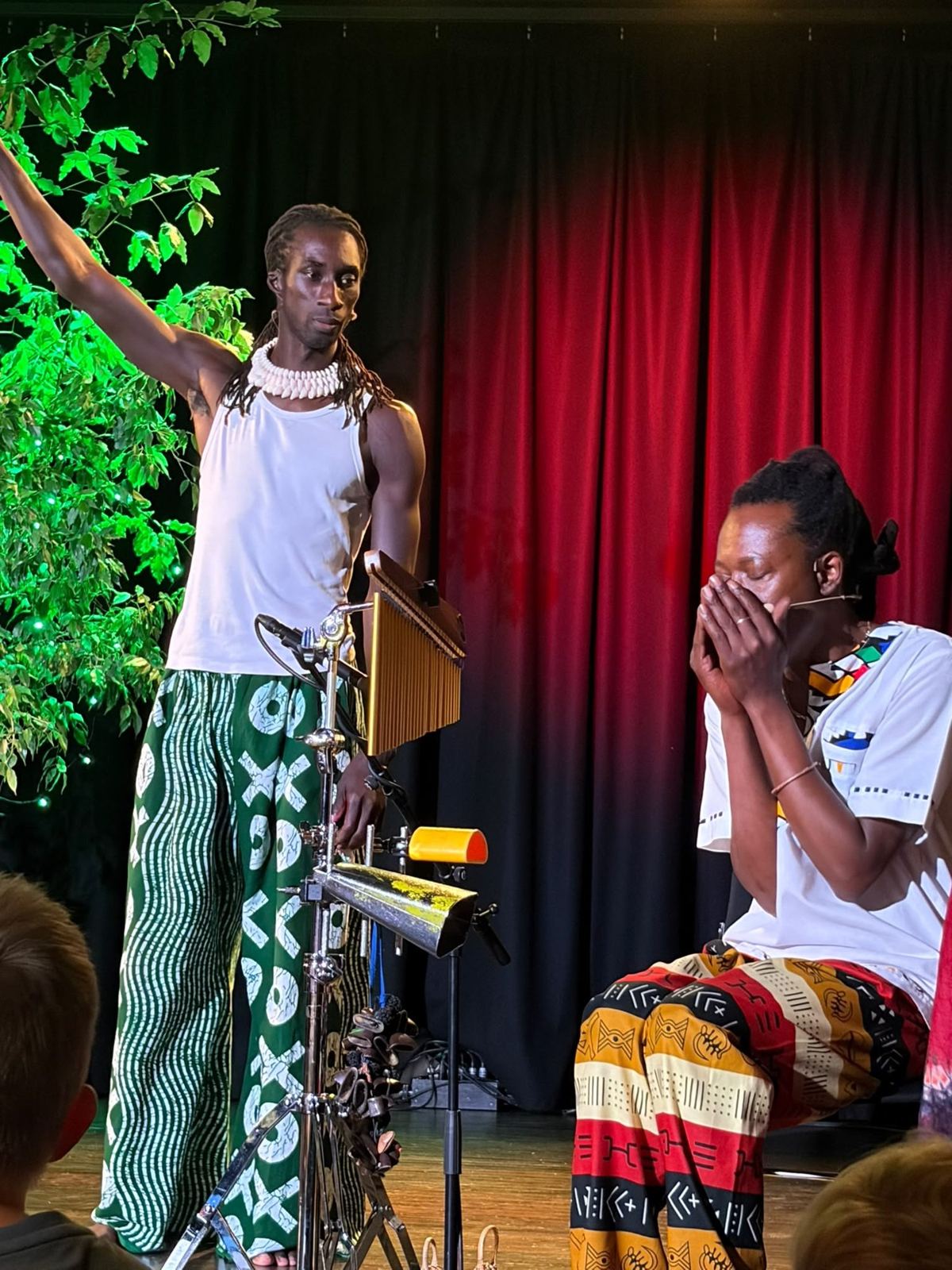
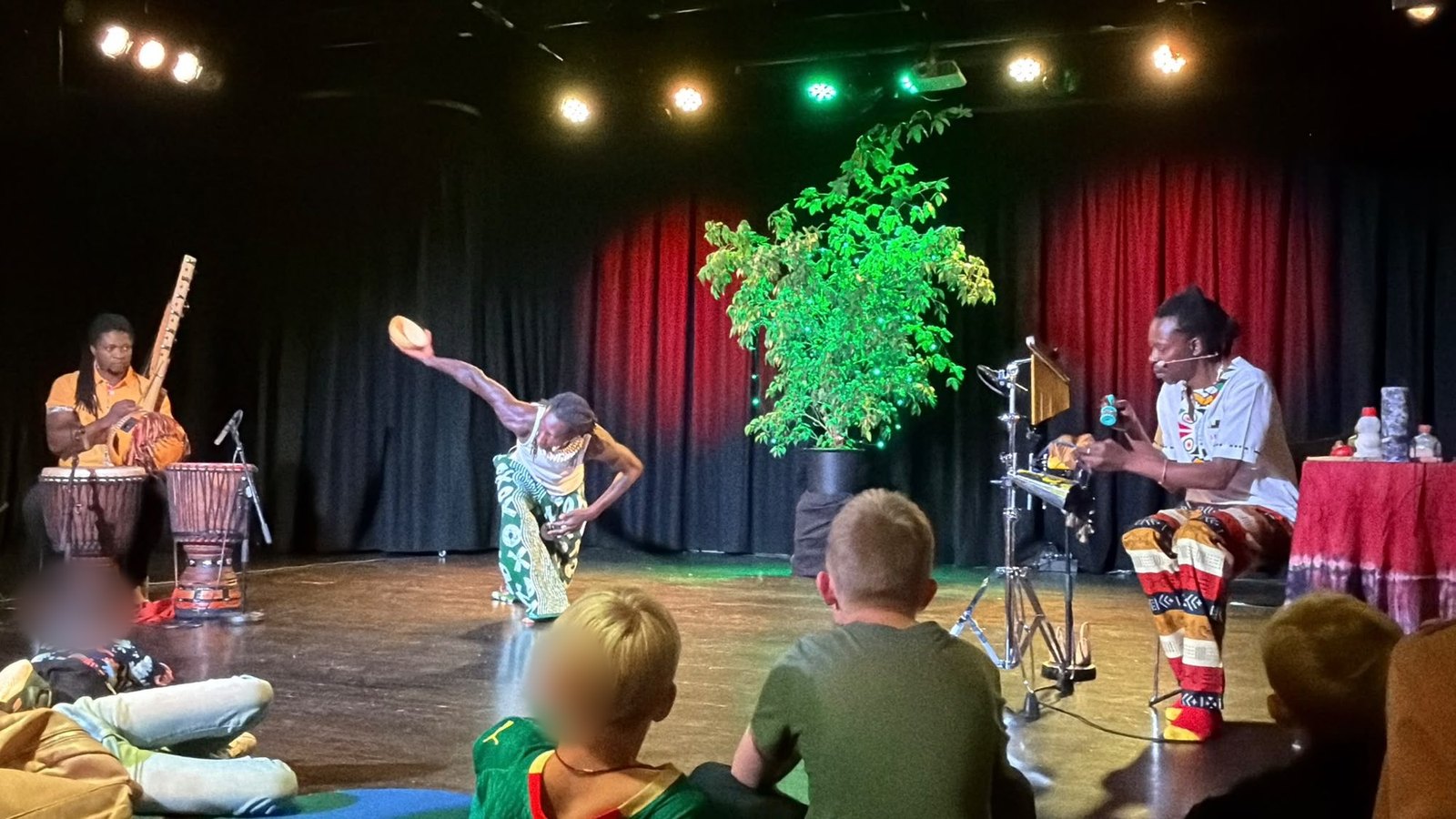
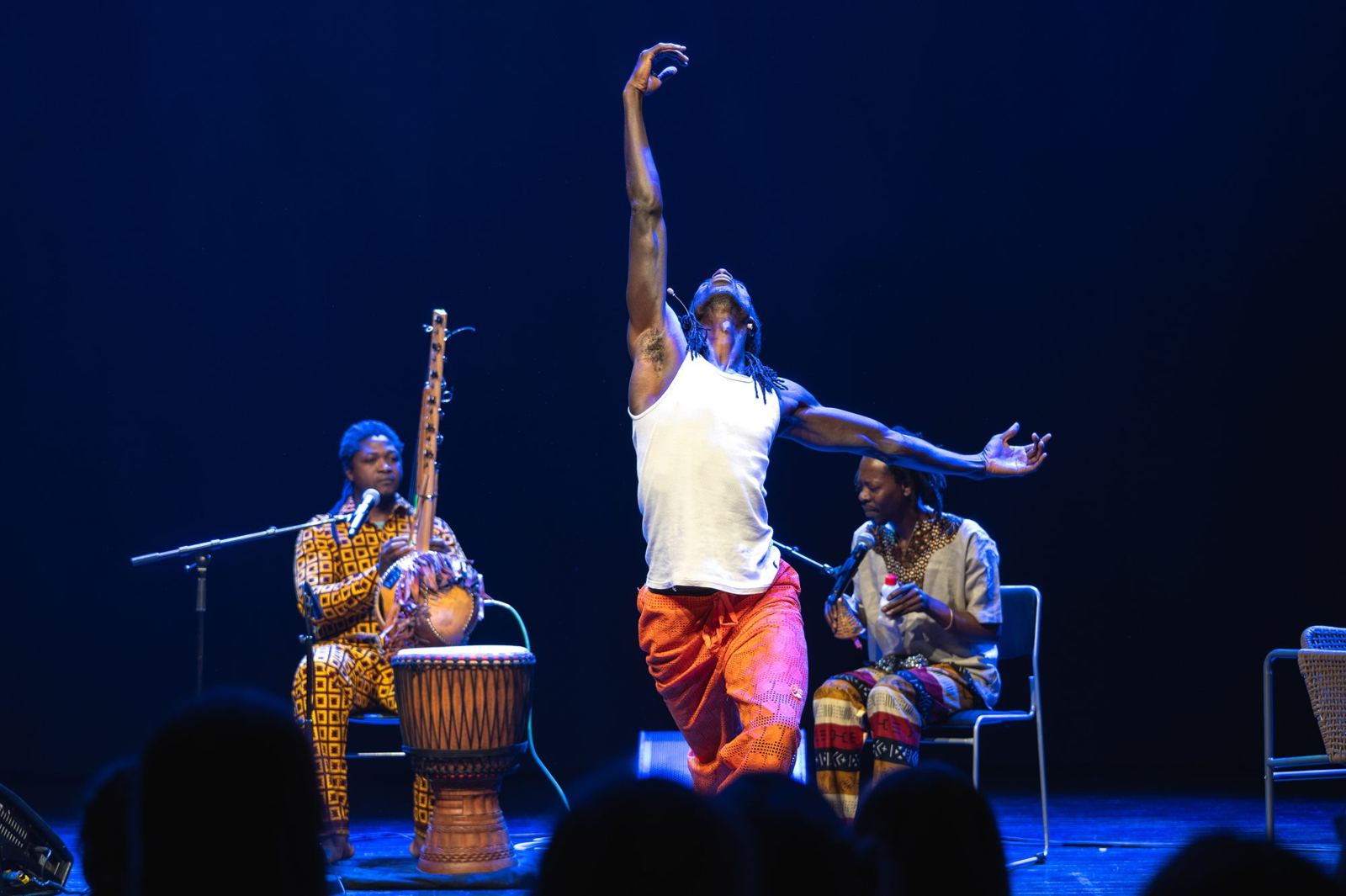
Inspired by the West African griot tradition, Calabash Tales combines storytelling, ngoni, djembe, percussion, song and dance in an interactive performance where children become part of the story through call-and-response, singing, clapping and movement.
Through the king's encounter with a travelling griot and the mysterious spirit of the calabash, the performance explores listening, memory, respect and the stories that connect generations.
About the performance
Calabash Tales is an interactive performance for children that brings together storytelling, live music, dance and participation, inspired by the West African griot tradition.
At the heart of the performance is the griot: musician, storyteller and keeper of histories, carrying stories from one generation to the next and helping to connect families and communities.
The audience is welcomed into the story through the traditional call and response "Talin Talin – Talin Diman." From there, the performers lead the children into the village of Diobaso.
A young prince has been given an important piece of advice by his father before becoming king: always take care of the griot and listen to the stories he carries. But as the years pass, the new king becomes increasingly concerned with his own importance. He stops listening to others and eventually forgets his father's advice.
When a travelling griot arrives in Diobaso, something changes. The people gather around him. Through music and stories they laugh, listen and reconnect. Seeing how deeply the people respond to the griot, the king becomes jealous and orders him to leave.
Before departing, the griot asks the king to follow him into the forest one final time. At a river, he takes a calabash, divides it and fills it with water. From the shimmering water emerges a spirit carrying a simple message: "Take care of the griot."
The encounter reminds the king of what he has forgotten: the importance of listening, remembering and respecting the stories that connect his people. He returns to Diobaso changed.
The story unfolds through ngoni, djembe, percussion, voice, movement and dance, moving continuously between narration and live musical scenes. The children are not simply spectators: they answer the storyteller, sing, clap, move and eventually join the performers in a joyful final dance.
Artistic team
- Solo Diarra: ngoni, djembe, percussion and vocals
- Bafana Nhlapo: vocals, percussion and performance
- Sarjo Sankareh: storyteller and dancer
The production combines the individual musical and movement traditions of the three performers with the West African oral storytelling tradition.
Themes
At its centre, Calabash Tales explores listening, memory, respect, community and the importance of passing stories between generations. Rather than explaining these ideas to children, the performance allows them to experience them through story, rhythm, movement and participation.
Performance history
Calabash Tales has been presented across Norway and internationally, including at the International Children's Festival in Croatia, Førdefestivalen, Barna Verdensdager, Skatteskista, and at Deichman libraries and other libraries throughout Eastern Norway.
Coming up: Folkelarm, 22 November 2026.
Produced in collaboration with Samspill International Music Network.