Music · Storytelling · Rhythm · Movement · Connection
Rhythm & Story
Stories become songs, rhythms become movement, and music becomes a meeting place.
- Who it is for
- Older people, including people living with dementia · senior centres, nursing homes, day centres, activity centres and other care and community settings
- Format
- Approx. 40 minutes, adaptable to the group · single session, short series or ongoing weekly programme
- Artists
- Solo Diarra, Sarjo Sankareh
Rhythm & Story is a participatory live arts programme for older people, bringing together West African music, griot storytelling, rhythm, song and accessible movement.
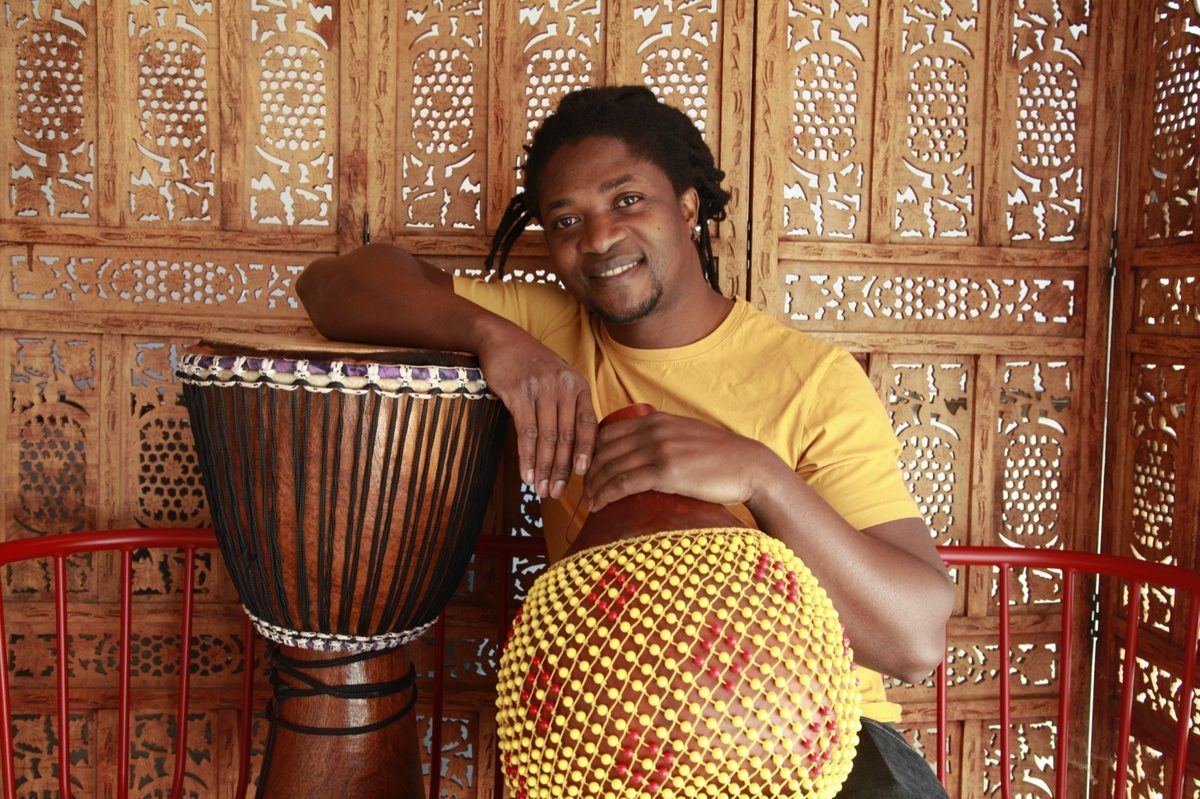
Led by Solo Diarra and Sarjo Sankareh, the programme creates a warm cultural meeting place where participants can listen, sing, clap, move, play simple instruments, share responses and experience live music together.
Participation can take many forms. There is no requirement to perform or keep up: each person can take part in the way that feels natural to them.
About the programme
A Rhythm & Story session begins gently, often with a simple pulse through clapping, voice or an accessible instrument. Solo introduces live sounds from instruments such as ngoni, djembe and calabash, while participants are invited into call-and-response songs and simple rhythmic exchanges.
Storytelling is woven directly into the musical experience. Drawing on the West African griot tradition, Solo shares short stories, memories or proverbs that can lead into a rhythm, a song, a response or a moment of conversation. The story is not a separate lecture: it becomes part of the shared musical journey.
Sarjo brings accessible movement into the session. Movement can be gentle and can be done from a chair, allowing participants with different levels of mobility to experience rhythm physically. A hand movement, a clap, a foot tapping, a voice joining the song, or simply attentive listening, can all be meaningful forms of participation.
The atmosphere is social but unpressured. The artists respond to the room and let the pace of the session follow the participants rather than forcing a fixed sequence.
Artistic team
- Solo Diarra, music, songs and storytelling: ngoni, djembe, calabash, voice, rhythm and short stories or proverbs rooted in West African oral and griot traditions
- Sarjo Sankareh, movement: gentle, accessible movement and bodily participation adapted to the mobility and energy of the group
A flexible model: from one visit to a weekly programme
Rhythm & Story is not limited to a fixed course length. A centre can invite Foli Arts for one session, develop a short series, or establish the programme as an ongoing weekly activity.
The ongoing model is particularly valuable because familiarity can grow from week to week. Songs can return, rhythms can become recognisable, stories can continue and the artists can gradually build a relationship with the participants and staff. Each session remains complete in itself, while regular meetings allow the shared cultural experience to deepen over time.
Staff participation and knowledge sharing
Staff are welcome to participate alongside residents and visitors. In longer collaborations, Foli Arts can also share simple rhythm, call-and-response and seated movement activities that staff can continue using between artist visits. This supports continuity without turning the artistic programme into a training course.
Pilot
Rhythm & Story is being piloted at a senior centre in Sandefjord in autumn 2026. Photos, video and feedback from the pilot will be added here.